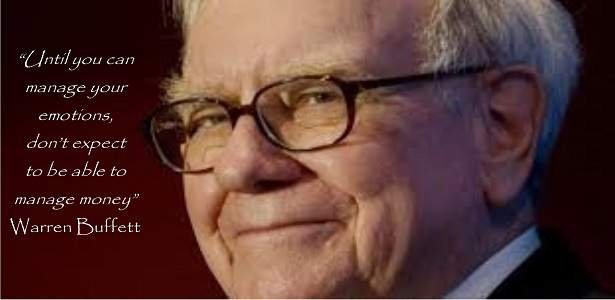
Your ability to control your finances is directly proportional to your ability to control your emotions. Our emotions move us to act. If you are not fully engaged emotionally, you keep dilly-dallying and procrastinating. Talk is very cheap. Everyone talks but few take action.
Taking action requires boldness, guts (chutzpah). Wanting something and going for it are two different things. Experienced sellers can tell which customer is ready to buy. In economics, effective demand is when you have the money and are willing to put it down in exchange for a product or service. You may have the money but are not ready to let go of it. You may want something but are not yet ready to pay the full price.
What you do with your money depends on how you feel. That is why people who want to get money from your appeal to your emotions. You may notice that some of your children are better at getting things from you than others. Some organizations hire and pay speakers based on their ability to move you to give. Many businesses hire pretty ladies as receptionists, salespeople, shop attendants, etc. This is because shoppers are more likely to buy from attractive salespeople. This is not just a perception. Researchers have proven there is a science to back up that perception. Professors from the University of British Columbia and Arizona State University carried out research on this phenomenon titled ‘Positive Consumer Contagion: Responses to Attractive Others in a Retail Context’. Male customers tend to be more impacted, as they try to impress the ladies, spending more in the process. It is all emotions at play.
If you are not fully committed to your financial goals, you may not be able to take action at the required level to move from where you are toward where you want to go. You can read a good personal finance book or attend a seminar and get all fired up but lose momentum as you return to your emotional comfort zone or status quo. You are not there yet. There is more work to be done for you to get there – there being that place where you take the required action on a consistent basis.
Fear and greed
There are two dominant emotions that drive people to take action in most markets – fear and greed. Fear takes hold when the market crashes as we are currently experiencing, while greed kicks in when the market is booming. The inability to manage both emotions moves novice investors to buy high and sell low. While this was not the original intent nor does it make sense logically, it is what eventually plays out. Many enter when the market is booming. Prices are going up and people are taking a profit. They watch from the sidelines to confirm if it is for real and if the trend will continue.
As the market keeps booming, they step in for their piece of the action. Shortly thereafter, the market hits its peak and starts its normal swings. They hold on hoping for another bull run. When prices come crashing down, they hold on hoping it will go back up. When it becomes evident that the market is not heading back up sometime soon, they run for the exit. Essentially they entered close to the top and exited close to the bottom – buy high, sell low. Their entry was motivated by greed and exit by fear.
Different psychology comes into play in shopping. People rush in when prices are crashing (sales) and rush out when prices go up. They pray for sales, plan for it and take the position to get in first before someone else does. When it comes to assets like good stocks, they run for dear life when it goes on sale. It all has to do with the ability to control one’s emotions.
Experienced investor does not enter markets randomly. They wait for windows of opportunity. They have an entry and exit strategy. They wait for the window to open and they move in. For some, their window of opportunity is wide open. They essentially go against the traffic. They are also referred to as contrarian investors. They move in while others are rushing out, and move out while others are rushing in. Warren Buffet, the world’s most popular investor and fabled ‘sage of Omaha’ said ‘be fearful when others are greedy and greedy when others are fearful”. Our emotions can be our greatest ally or our biggest enemy, depending on how skillful we are in managing them. It has been found that emotional intelligence is a better indicator of success in life than academic intelligence or IQ.
Making progress where it matters most.
Most people measure success in naira terms. If you want to check if you are a culprit, look at your goals for this year. Apart from health-related goals, chances are most of your goals are expressed in monetary terms. There is nothing wrong with having clear and concise financial goals. The clearer you are with respect to your financial (or other) goals, the better your chances of achieving them. However, money is just one of the outcomes of who you become.
Material things do not last. The brand-new car you bought three years ago is no longer the latest model. If you built your house more than 10 years ago, it will look old despite the latest designs. Clothes fade, money grows wings and nothing is permanent. It is who you become that endures. It is who you have become that is producing what you are seeing. If you lose it, you can make it back all over again. Long after you are gone, nobody cares what car you drove, what houses you built, or how much money you made. All that will be left is what difference you made, which is a function of who you became. The best investment you can make is investing in your growth and personal development. Making progress here is where it matters most and endures. This is what moves you to the next level and sustains you there. A new year begins with a new you.
What you see determines how you respond. Presently, many see a financial crisis while some see a window of opportunity. What you see and how you respond will determine what becomes of you when it is all over. Rather than look outside for answers, focus on developing yourself and making progress where it matters most.